01 · Definition What is SMILE?
SMILE (Small Incision Lenticule Extraction) is one of the latest advances in laser vision correction. Unlike traditional LASIK, which creates a flap in the cornea, SMILE uses a femtosecond laser to create a thin, lens-shaped layer of tissue (a lenticule) inside the cornea. This tissue is removed through a small incision of just 2–4 mm, reshaping the cornea to correct vision.
Because there’s no large corneal flap, SMILE is considered minimally invasive, with faster healing and no risk of flap-related complications. See each stage in our step-by-step procedure guide.
02 · Comparison SMILE vs LASIK vs PRK/LASEK
| SMILE | LASIK | PRK / LASEK | |
|---|---|---|---|
| Incision | 2–4 mm, flapless | ~20 mm flap | Surface, no flap |
| Return to routine | 1–2 days | 1–2 days | About 1 week |
| Dry-eye risk | Lower | Higher | Moderate |
| Flap complications | None | Possible | None |
| Discomfort | Mild | Mild | More for several days |
Compared with PRK, SMILE offers quicker healing, less discomfort and earlier vision stabilisation while still avoiding a flap.
03 · Suitability Who SMILE helps
Myopia (nearsightedness)
Up to around −10.00 diopters, depending on corneal thickness.
Astigmatism
Up to around −3.00 diopters.
Active lifestyles
Athletes, military personnel and anyone at risk of eye impact — no flap to dislodge.
Dry-eye-prone patients
Fewer corneal nerves are cut, reducing post-operative dryness compared with LASIK.
SMILE is not generally used for hyperopia (farsightedness). A full eye exam is essential — check the SMILE candidate criteria.
04 · Technology The ZEISS VisuMax femtosecond laser
SMILE is performed with the VisuMax® femtosecond laser by Carl Zeiss Meditec. The high-precision laser works at an extremely fast pulse rate, creating an accurate lenticule with minimal tissue disruption. Leading Seoul clinics combine the latest VisuMax generation with corneal mapping and tear-film analysis to plan each eye individually.
05 · Evidence Safety and outcomes
SMILE has been performed on millions of eyes worldwide with high patient satisfaction. Published outcomes show:
- Over 95% of patients reach 20/20 vision or better
- Lower incidence of post-operative dry eye than LASIK
- Very low complication rates thanks to the flapless technique
As with any eye surgery, risks exist — temporary vision fluctuation, halos, glare and rare under- or over-correction. Choosing an experienced surgeon significantly improves results. Read the full SMILE risks guide and the recovery timeline.
06 · Destination Why Seoul is a leading destination for SMILE
- Highly experienced surgeons with thousands of SMILE cases
- State-of-the-art clinics with the latest ZEISS VisuMax technology
- Competitive SMILE prices compared with the US, Japan or Singapore
- English-speaking coordinators for international patients
FAQ Frequently asked questions
What does SMILE stand for?
SMILE stands for Small Incision Lenticule Extraction — a flapless laser vision correction in which a lenticule is removed through a 2–4 mm incision.
Is SMILE better than LASIK?
Neither is better for everyone. SMILE avoids a flap and tends to cause less dry eye, while LASIK can treat a wider range including hyperopia. Your corneal thickness, prescription and lifestyle decide which is safer for you.
Does SMILE hurt?
Numbing drops are used, so the procedure itself is not painful. Most people feel mild pressure during surgery and slight irritation for a few hours afterwards.
How long does SMILE take?
The laser stage takes under a minute per eye; the whole appointment, including preparation, is usually under 30 minutes.
Can SMILE correct farsightedness?
In most current protocols, no. SMILE is used for myopia and astigmatism. Farsighted patients are usually assessed for LASIK, LASEK or lens-based options.
Medical review Who wrote and reviewed this guide
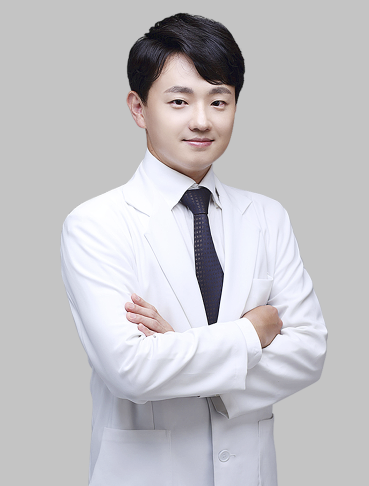
Medically reviewed by Dr. Dong-Joo Yeom, Ophthalmologist and Chief Director at Gangnam Smile Eye Clinic, a refractive-surgery clinic one minute from Gangnam Station Exit 10, Seoul.
Written by the Gangnam Smile Eye Clinic patient-education team with the clinic’s ophthalmologists Dr. Dong-Joo Yeom, Dr. Hyo-Sung Yoon and Dr. Sang-Jun Jung. Last updated
This page is general information, not a diagnosis. Suitability can only be confirmed after an in-person eye examination.